

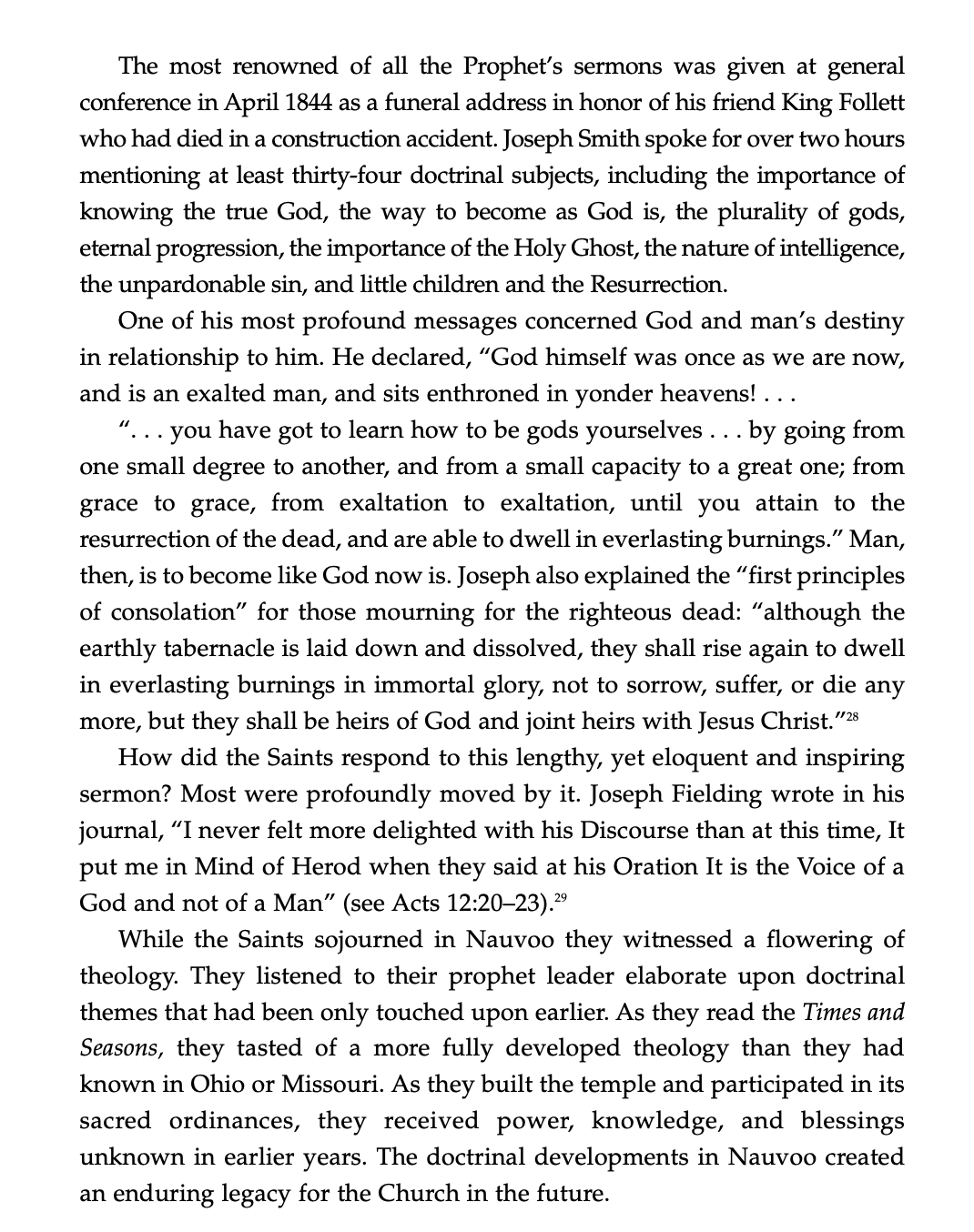
Early Mormon leader Joseph Fielding responded to the King Follett Discourse (April 7, 1844):
“I never felt more delighted with his discourse than at this time. They said at his oration, it is the voice of a god not of a man.” (Journal of Joseph Fielding, quoted in “The King Follett Discourse: Joseph Smith’s Greatest Sermon in Historical Perspective”)
Page 261 of the LDS manual “Church History In The Fulness Of Times Student Manual” awkwardly makes favorable use of Acts 12:20-23 to describe how the saints were “profoundly moved” by the King Follett discourse.
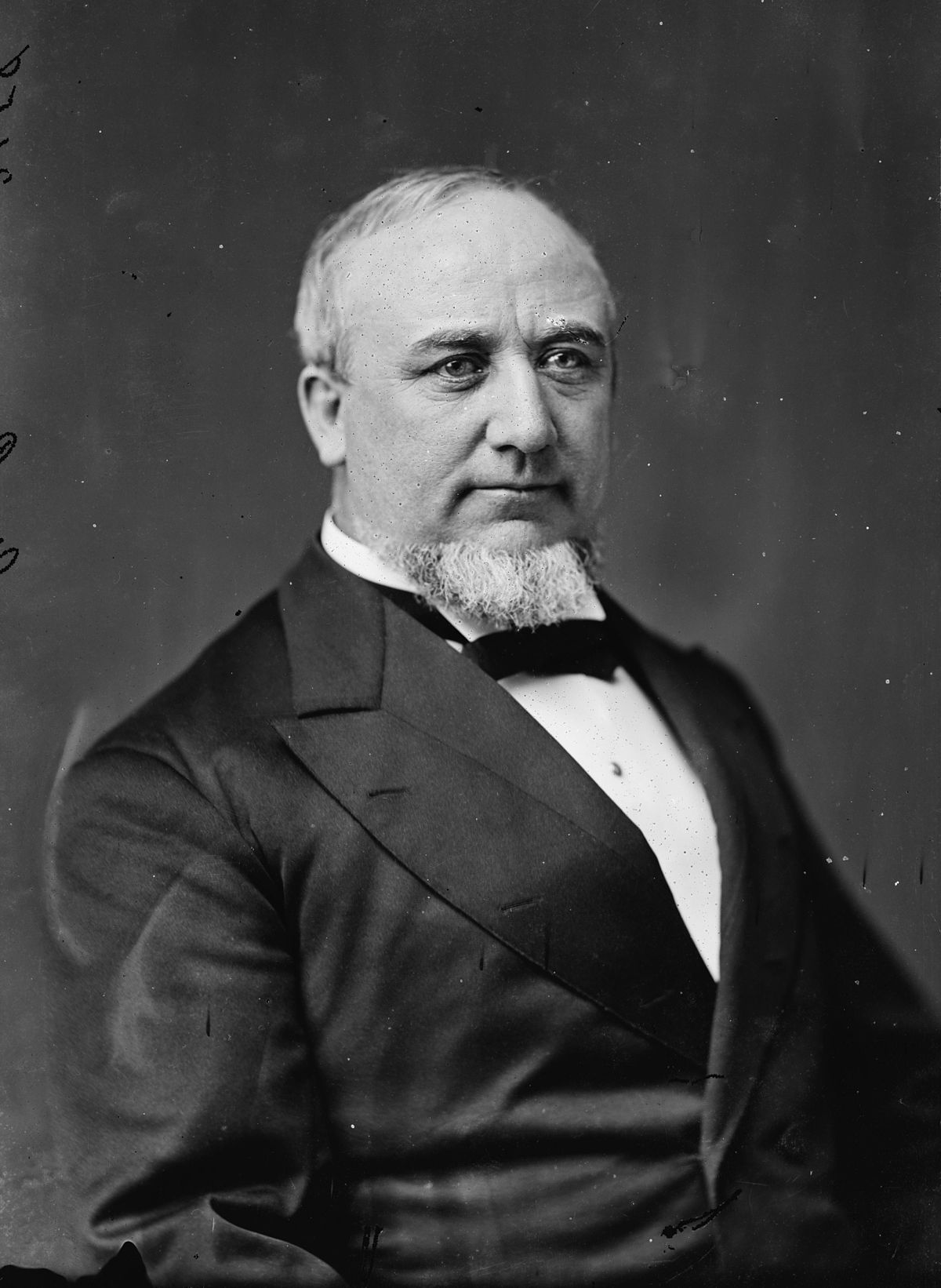
George Q. Cannon also spoke of Smith at the KFD:
“His address ceased to be a mere eulogy of an individual, and became a revelation of eternal truths concerning the glories of immortality. . . . The Prophet seemed to rise above the world. It was as if the light of heaven already encircled his physical being. . . . Those who hear that sermon may never forget its power. Those who read it today think it was an exhibition of superhuman power and eloquence.” (Quoted by Donald W. Cannon in “The King Follett Discourse: Joseph Smith’s Greatest Sermon in Historical Perspective”)
Recall after Tyre and Sidon responded to the oration of Herod:

“On an appointed day Herod put on his royal robes, took his seat upon the throne, and delivered an oration to them. And the people were shouting, ‘The voice of a god, and not of a man!’ Immediately an angel of the Lord struck him down, because he did not give God the glory, and he was eaten by worms and breathed his last.” (Acts 12:21-23)
Joseph Smith died on June 27, 1844, 81 days after he delivered the King Follett Discourse.

You must be logged in to post a comment.