
Category: Book of Abraham
-

New York Times 1912 Exposé of the Book of Abraham
The New York Times produced this 1912 exposé based on the three facsimiles included with the Pearl of Great Price within the Book of Abraham.
-

Charles M. Larson’s Endorsement of GLM Video on the Book of Abraham
Charles M. Larson writes a comment on August 17, 2024, in response to Why Mormonism Can’t Recover from “The Book of Abraham”: Hello. I am the author of By His Own Hand Upon Papyrus — a New Look at the Joseph Smith Papyri (Institute for Religious Research, Grand Rapids, MI 1992), and I strongly endorse…
-
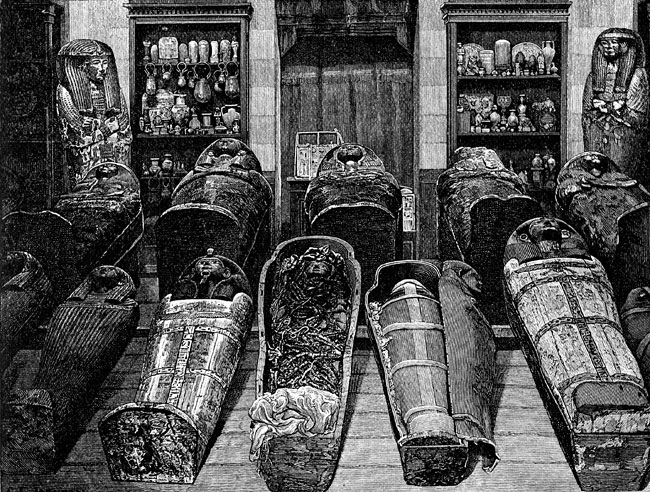
What Happened to the Joseph Smith Mummies?
Under the date of July 3, 1835, the Documentary History of the Church (2:235) states that a man named Michael Chandler visited Kirtland, Ohio “to exhibit some Egyptian mummies. There were four human figures, together with some two or more rolls of papyrus covered with hieroglyphic figures and devices.” Speaking in the first person,…
-
Abraham 1:26 and the Priesthood Ban
Note: The following was originally printed in the November/December 2020 edition of Mormonism Researched. To request a free subscription, please visit here. In his book The Church and the Negro, LDS author Dr. John Lewis Lund cited a letter written by ninth LDS President David O. McKay. Dated November 3, 1947, McKay gave a lengthy response to…
-
The Book of Abraham: A Mormon Conundrum
In early July (2014) the Mormon Church released a Gospel Topics essay on the translation and historicity of its controversial book of scripture known as the Book of Abraham. The essay has done nothing to quiet the controversy. At issue is the question of Joseph Smith’s translation of some ancient Egyptian papyri that resulted in…
-
Book of Abraham (Defined)
Book of Abraham. “A Translation of some ancient Records, that have fallen into our hands from the catacombs of Egypt.—The writings of Abraham while he was in Egypt, called the Book of Abraham, written by his own hand, upon papyrus. See History of the Church 2:235, 236, 348-35” (Introduction to Abraham 1). According to a…
-
Indecent Exposure (Part 4 of 4)
Given that the parchments of the Book of Abraham facsimiles have been recovered, they should be a “signature piece” of Joseph Smith’s credentials, silencing the critics once and for all. The evidence is clear to anyone who wants to look at it. Joseph Smith didn’t know what he was doing when he supposedly translated these…
-
Indecent Exposure (Part 3 of 4)
For mature audiences only At the end of part 2 of our series we discussed the Mormon connection/similarity that is implied by Mormon intellectuals between the Mormon god and a pagan Egyptian god in Facsimile No.2, Figure 7. Since Joseph Smith took it upon himself to draw in the missing parts incorrectly, it is up…
-
Indecent Exposure (Part 2 of 4)
For mature audiences only In the second part of our series on the facsimiles from The Book of Abraham I would now like to focus our attention on Facsimile No.2. This will be the main focus of our attention from this point on. Let’s look at Facsimile No.2 that comes from the Book of the…
-
Indecent Exposure (Part 1 of 4)
I would imagine that my reaction and thoughts were the same as most who are not members of the LDS Church when opening up The Book of Abraham for the first time: fascination and curiosity. Even Mormons might have the same reaction if they were converts to the Church and then discovered The Book of…
-
Mormon Church Showcases Statement, “The Church does not stand or fall on the Book of Abraham”
On Tuesday, August 11th (2009) the “Authorized news web site of The Church of Jesus Christ of Latter-day Saints” (Church News) showcased a lecture given by John Gee, “an associate research professor of Egyptology at the Neal A. Maxwell Institute for Religious Scholarship at BYU” (the organization formerly known as FARMS). “While critics of the…
-
The Book of Abraham
By Bill McKeever According to the Documentary History of the Church (DHC) 2:235, it was on July 3, 1835 when Michael Chandler “came to Kirtland (OH) to exhibit some Egyptian mummies.” According to the record, “There were four human figures, together with some two or more rolls of papyrus covered with hieroglyphic figures and devices.”…