
Category: Mormon History (1830-1844)
-
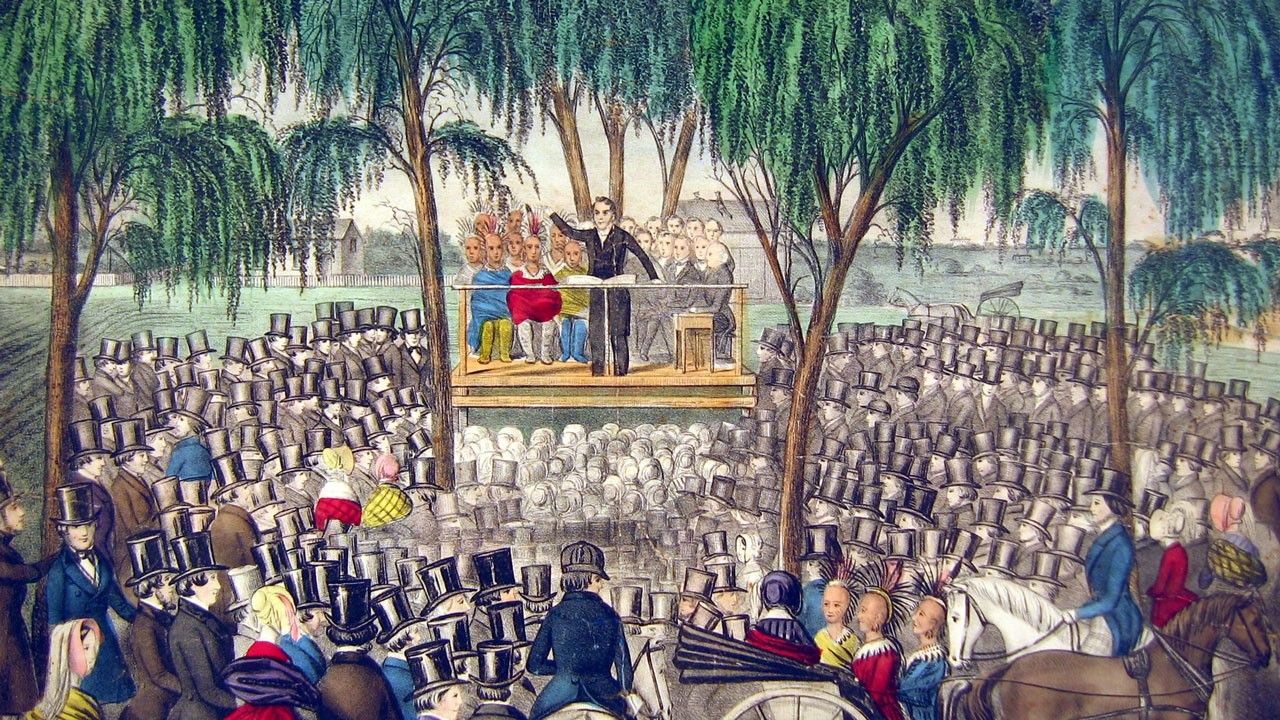
Q&A: The King Follett Discourse
The sermon “is widely recognized as his single most important preaching event and perhaps the most important Mormon sermon of all time.”
-

Joseph Smith and the Kinderhook Plates
Note: The following was originally printed in the July/August 2024 edition of Mormonism Researched. To request a free subscription, please visit here. Members of The Church of Jesus Christ of Latter-day Saints are told by church leaders that Joseph Smith, Jr., the founder of their religion, had been given the ability by God to make reliable translations…
-

Just What is “An Address to All Believers in Christ”?
Published in 1887 by Book of Mormon witness David Whitmer (1805-1888) just a year before he passed away, An Address to All Believers in Christ: A Witness to the Divine Authenticity of the Book of Mormon provides a look at the mindset of a man who was considered one of the “three witnesses” of the…
-
Putting “History” Back in the LDS Church’s News Release on Historic Kirtland
Kirtland, Ohio was once the headquarters of what is today known as The Church of Jesus Christ of Latter-day Saints. From February 1831 to January 1838 the church’s founder, Joseph Smith, lived in Ohio while directing the church’s affairs. The Kirtland years were very important in laying the foundation of the Mormon church. One LDS…
-
Trouble in Paradise: Thomas Marsh Takes a Stand
Thomas B. Marsh was the President of the Quorum of the Twelve [LDS] Apostles in 1838. Over the years, he had proven himself a loyal and faithful supporter of the Prophet Joseph Smith. Joining the Mormon Church in 1830 and called as an apostle in 1835, Marsh stood with Joseph Smith through thick and thin…
-
Early Mormonism in Missouri
In 1838 the headquarters of the Mormon Church was located in western Missouri. Mormons began arriving in this state in the early 1830s settling in Jackson County, around the city of Independence. However, trouble erupted between the Mormons and the non-Mormon Missourians, which resulted in the Mormons being forced out of Jackson County in 1833.…
-
Sexual Morality in Old Mormon Nauvoo
Sexual morality in early 1840s Nauvoo, Illinois, the City of Joseph [Smith], was enough to make most people blush. John C. Bennett, who had for 18 months been a member of Joseph Smith’s inner circle and close confidante, left the Mormon Church in May of 1842. He subsequently exposed “Joe Smith as the seducer of…
-
What I Learned on My Visit to Old Mormon Nauvoo
A few weeks ago I visited The City of Joseph: Nauvoo, Illinois. It was quick trip; I was only able to spend two days in the area, hurrying from place to place in an effort to do some primary source research. I had little success regarding the event on which I sought information, but I…
-
Book Review: The 1838 Mormon War in Missouri
Not everyone likes history, especially Mormon history. But if there is a particular year that ought to be understood for a better comprehension of Mormonism, the year would have to be 1838. For those who have heard of “Gov. Boggs,” the “Salt Sermon,” and the Hahn’s Mill massacre, this is the book that must be…
-
Josiah Quincy’s Visit to Nauvoo
Josiah Quincy’s Visit to Nauvoo By Sharon Lindbloom The following was originally printed in the Sept-Oct 2011 edition of Mormonism Researched. To request a free subscription, please visit here.
-
Summer 1844: Sorrowful Times in Nauvoo
Latter-day Saints Isaac and Sarah Scott were married in Massachusetts in 1843. They moved to Nauvoo, Illinois, where they became eyewitnesses to the events surrounding the deaths of Joseph and Hyrum Smith. Sarah wrote to her in-laws beginning on July 22, 1844, a few weeks after the murders; Isaac added a short note at the…
-
The Demise of the LDS Church in Kirtland
Mormonism began in 1830 in a sleepy township in upstate New York. After Mormon missionaries realized great success gaining converts in Ohio, the religion’s founder, Joseph Smith, moved his fledgling church 250 miles west to the little town of Kirtland. Within months, Joseph sent a number of Church members farther west to Missouri to begin…
-
John C. Bennett
On a recent trip through Iowa I stopped at the Polk City Cemetery, where early Latter-day Saint leader John C. Bennett is buried. Bennett joined the LDS Church in Nauvoo, during the summer of 1840. He quickly became a very close friend and confidante of Joseph Smith. Joseph received a revelation on January 19, 1841,…
-
Elijah Abel: “Thy Soul [Shall] Be White in Eternity”
Elijah Abel was the first Black man to hold the priesthood in the LDS Church. He received his ordination as Elder on March 3, 1836. Later Elijah was ordained a member of the Third Quorum of the Seventy. In 1838 he went on missions to Canada and New York, and served a mission to Ohio…
-
Fourth of July in Far West, 1838
On the 4th of July, 1838 the Mormons, gathered in Far West, Missouri, held a celebration. The following is an excerpt from former BYU historian Stephen C. LeSueur’s book, The 1838 Mormon War in Missouri, pages 49-53. Real conflict between the Mormons and the Missourians began a short time later. Three months after Rigdon’s speech,…
-
Violence in Early Mormonism – Was It All Unjust Persecution?
By Bill McKeever Members of the LDS Church often make a big issue of the fact that their ancestors faced terrible persecutions during the early years of the LDS movement. To most people, Missourian sites like Independence, Liberty, Far West, and Caldwell County mean very little. Yet to the faithful Latter-day Saint, these places carry…
-

The Nauvoo Expositor
NAUVOO, ILLINOIS, JUNE 7, 1844. We give this week to the following Preamble, Resolutions and Affidavits, of the Seceders from the Church at Nauvoo.– The request is complied with on account of their deeming it very important that the public should know the true cause of their dissenting, as all manner of falsehood is spread…